
In 2023 and 2024, Capricorn made the transition from a larger exploration company managing multiple assets to a more streamlined organisation with a non-operated stake in onshore Egyptian assets. As a result of this reduction in operations and size, the Company chose to undertake a double materiality assessment (DMA) to reassess our material topics in light of these changes, allowing us to refocus our ESG and sustainability efforts to be more representative of Capricorn today.

Capricorn is committed to delivering value in a safe, secure, environmentally and socially responsible manner for our stakeholders. Delivering our strategy, achieving our objectives and creating long-term value for our shareholders requires robust, transparent corporate governance. Good governance, combined with our responsible culture, helps to ensure that the Company continually works to benefit our stakeholders.
- Anti-corruption
- Sustainability Committee met twice in 2025 to discuss ESG issues.
- Anti-bribery and corruption, tax evasion compliance and cyber security training programme completed across the Group.
- The Capricorn Board received regulatory training on UK Listing rules, as well as training on Egypt macro risks and legal frameworks.
- Implemented controls to meet the 'reasonable procedures' defence under the new Economic Crime and Corporate Transparency Act 2023 Failure to Prevent Fraud offence. This included the completion of a risk assessment, the development of policy documentation and the introduction of periodic fraud audit checks.
- Risk review meetings completed with all departments to review and discuss ESG risks and opportunities.
- Continued commitment to ethical operations and ESG governance.

Materiality Matrix
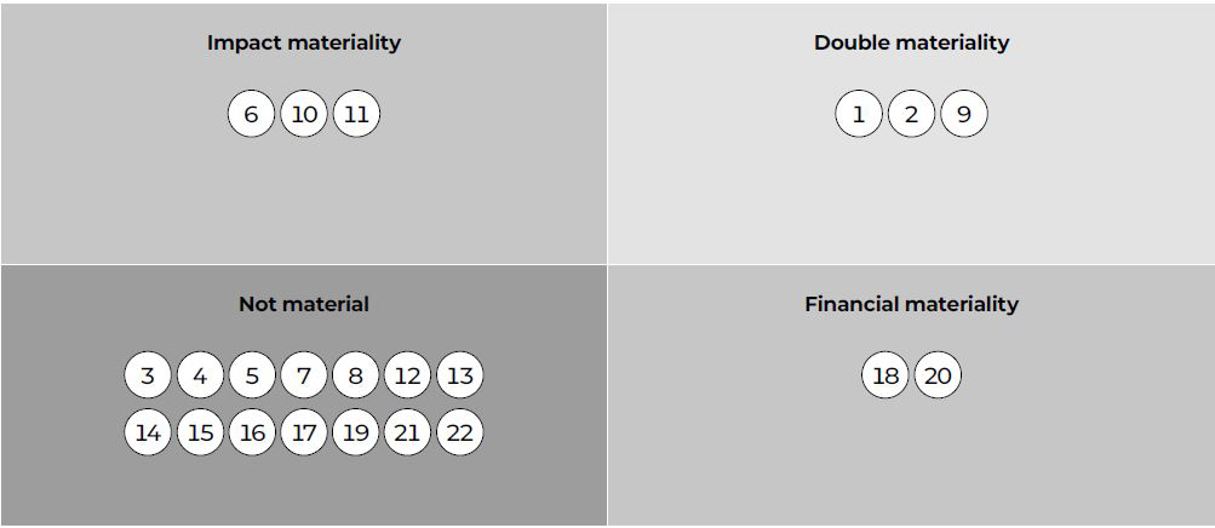
The outcome of Capricorn’s DMA is represented in the materiality matrix below:
Material Topics
1) GHG emissions | 9) Occupational health and safety | 17) Rights of indigenous peoples |
| 2) Climate adaptation, resilience and transition | 10) Employment practices | 18) Conflict and security |
| 3) Air emissions | 11) Non-discrimination and equal opportunity | 19) Anti-competitive behaviour |
| 4) Biodiversity | 12) Forced labour and modern slavery | 20) Anti-corruption |
| 5) Waste | 13) Freedom of association and collective bargaining | 21) Payments to governments |
| 6) Water and effluents | 14) Economic impacts | |
| 7) Closure and rehabilitation | 15) Local communities | |
| 8) Asset integrity and critical incident management | 16) Land and resource rights |